

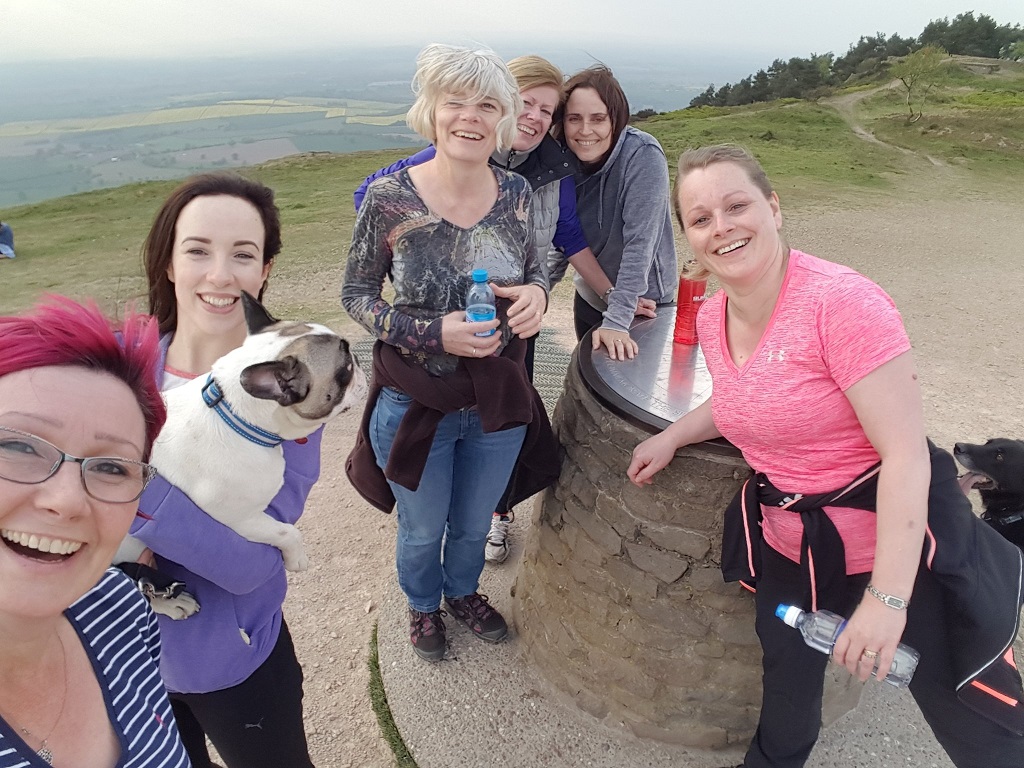
By Jennifer Davies, Public Health Practitioner
I’m Quality Assured!
There’s a national movement to protect the job title ‘Public Health Practitioner’, much like how we protect job titles like ‘Architect’ and ‘Nurse’ so that you can’t just rock up and pretend to be one.
To earn my UKPHR accreditation I spent a year putting together a portfolio full of evidence and learning to demonstrate to a panel that I am a safe and competent person to work in Public Health, and I have to refresh this annually.
It’s not all about how long you live
In Public Health we distinguish between how many years you live, and how many years you live in good health. For example, a baby girl born in Telford now can expect to live to 82 but will probably only get to 58 living at a good quality of health. Through our work and that of our NHS partners, we want to narrow that gap to help people live in good health for as long as possible.
A healthy lifestyle is a powerful medicine
What makes us unwell is often determined by our environment, experiences, genetics and bad luck but we can all reduce our chances of getting ill by making better lifestyle decisions. Not smoking, drinking moderately (or not at all), eating well and exercising regularly.
The role of Public Health is to try to make it easy for people to change their health behaviours; and also to work with our partners who have an impact on the socioeconomic factors, everyone from schools, colleges and workplaces, to the police, midwives, and community groups.
Public Health has a tough side too
There is a misconception we spend out days chatting about salad and yoga. Of course we want to help people live better, feel better and live happier lives – this is what motivates us.
However, the reality of our jobs also means that we have to be savvy – we need to be able to understand the bigger picture, the local health economy, the political climate and the demands on public sector resources.
Many of my colleagues are commissioners of public services and have to have pretty hot business skills to make sure that Public Health services are efficient and providing the best possible service for the money that the taxpayers invest in them.
People who work in factories are more likely to smoke
People who work in ‘routine and manual jobs’ like factory work are more likely to smoke than people who do not. In Telford, about 15% of adults smoke cigarettes but 26% of adults who have routine and manual jobs smoke. It’s not just us either, this is the same pattern seen across England.
People find it difficult to accept help
We have excellent support to help people make changes to their lifestyles, whether that is lose weight, get fitter or just get out and learn some new skills. This is through our Healthy Lifestyles Service, who also offer blood pressure and lung capacity tests, health advice for all ages and even free one-to-one ongoing meetings to work with you to meet your goals.

The Healthy Lifestyles Service helps people make really positive changes to their lives. However, there’s still a lot more people who’ve never heard of the service. We’ll keep working on it!
Data is exciting
I can’t tell you how much we love data! Or even better – nicely presented data.
We think about 48% of the population in Telford eat their 5-a-day. About 71% of adults in Telford are overweight or obese and only about 53% of us are active enough. See? Fascinating!
Our advice is pretty good for the majority of the population, but there are always exceptions
In Public Health we have to give out advice that will benefit the vast majority, so inevitably it will not be perfect for absolutely everyone. A good example of this is the old classic, the BMI (Body Mass Index) measure of weight. It looks broadly at your height and weight and gives you a rough idea of whether you are overweight. It’s a good measure of whether you are overweight or obese for most people, but because it doesn’t take into account where your fat is stored or whether you have abnormally high muscle mass, there’s always a few people that it doesn’t apply to so well.
For some people, their genetics really will mean that their body will be healthy and happy at a slightly higher or lower weight than average. But unfortunately – and I’m sorry to tell you – the people that weigh heavier on the BMI scale purely due to muscle mass are very few and far between when we look at the population as a whole.
However, if you think we’re wrong and you want to know if you really are the exception to the rule, contact the Healthy Lifestyles Service who can give you a health check and talk you through it.
We don’t have a lot of money so we use social media for a lot of our Public Health messages
In this day and age of decreasing budgets and increasing social media use by the general public, it only makes sense that our campaigns and health messages go online. So a personal challenge for me over the last couple of years has been to learn how to use Twitter, and write blogs and understand marketing terms like ‘call to action’ and ‘impressions’ and ‘engagement rate’.
No two days are the same
Working in health in a political setting like the Council means that the diversity of what I can get involved in is huge! My workload can bounce around between planning a social media campaign, designing and delivering training, reviewing scientific studies and government policy to help design a new project, before I head off to talk to local pharmacies. It’s fascinating, stimulating and rewarding work and I wouldn’t change a thing.