

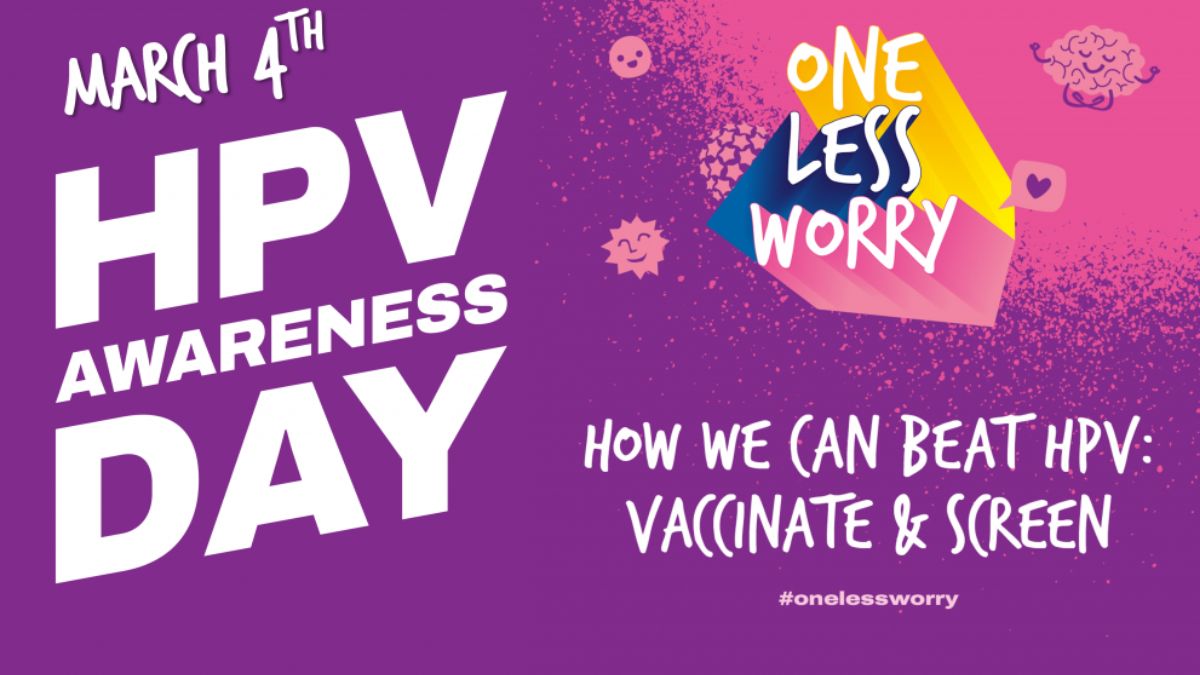
To mark HPV Awareness Day this year (4 March 2025), the Public Health Teams for both Shropshire Council and Telford & Wrekin Council have been working to raise awareness about human papillomavirus (HPV).
What is HPV?
HPV, or the human papillomavirus, is a really common virus and most of us will have HPV at some point in our lifetime without it causing any harm and usually without us knowing.
HPV lives in the skin and the cells lining the inside of our body, so it can pass between people through close skin to skin contact, often during sex. However, labelling HPV as a sexually transmitted infection (STI) isn’t particularly helpful. There are hundreds of strains of the virus, and having HPV is a normal part of life. Most people will have some type of HPV in their lifetime.
Busting some HPV myths
- Many types of HPV affect the mouth, throat and genital area, so you do not need to have sex to catch HPV.
- Having HPV is not something to be ashamed of and having it doesn’t mean that you or your partner have been unfaithful. It’s a common infection.
- Although HPV can cause cancer, having it doesn’t mean you will definitely get cancer. Cervical cancer is the type most strongly linked to HPV infection, but HPV can also cause cancer of the anus, penis, vagina and vulva, and some types of mouth and throat cancers. The HPV vaccine and cervical screening are the two ways in which we can all protect against cancer.
Keeping the conversation going

The Shropshire Telford & Wrekin vaccination project funded by NHS England finishes at the end of March 2025. The project’s aim has been to increase the uptake of the HPV and MMR (mumps, measles and rubella) vaccines. To that end, Vaccine Educators have been presenting at secondary school assemblies and community venues to promote these vital vaccinations.
There are around 2,700 cases of cervical cancer diagnosed in England every year, but we can make this a thing of the past thanks to cervical screening and HPV vaccination.
Although not everyone will be comfortable talking to their children, friends or partners about HPV, health professionals, including Cancer Research UK nurses, have received lots of questions from people worried about what HPV is, and what having HPV means for the health of themselves and their loved ones.
HPV vaccination is an important part of reducing the number of people with high-risk HPV and in turn, the number of people who develop HPV-related cancers. In the UK, all children aged between 12 and 13 are offered the HPV vaccine. Anyone who missed out on their HPV vaccination can still catch up until their 25th birthday (for girls born after 1 September 1991 and boys born after 1 September 2006).
Don’t forget

The HPV vaccine is the best way to protect against cervical cancer, but it isn’t 100% effective, so attending regular cervical screenings whether or not you’ve had the vaccine is really important. Cervical screening is offered to all women and people with a cervix between the ages of 25 and 64.
For more information:
- Watch this short video from Public Health Wales: HPV – Advice to my Younger Self
- Visit the HPV Awareness Day website: Information for Young People – International HPV Awareness Day
- Visit NHS website for more information: NHS – Human Papilloma Virus (HPV)